How To Remove Adhesive from Wooden Surfaces| Easy Ways
Have you had a time trying to peel off the sticky stuff when you are peeling off the label, the tape, or the old sticker on your furniture? Or have you attempted to remove glue and have been frightened of spoiling the piece of wood beneath? If so, you’re not alone. Removing the adhesive from the wooden surfaces is not an easy task that takes time, which is annoying, unless the appropriate procedures have been applied.
The good news is that carrying out the procedure of removing adhesive from wood does not always have to be a nightmare. You should be able to make a scratch or stainless restoration of wood with the right tools and intelligent methods. Actually, once you get to know how to work with adhesive from wooden surfaces, it is a very easy, though almost fulfilling, task.
A Guide on Adhesive Removal from Wooden Surfaces
Here is a proper guide for removing adhesive from wooden surfaces to solve sticky spots and leave surfaces intact. From vinegar to soft scrapers, these tips, which bond cleaning Scarborough experts suggest, make the task easy, secure, and very successful.
1. Begin with Mellow Soap and Warm Water
When starting with strong solutions, start with the basics. Add some warm water and a little bit of mild dish soap, then wet a soft cloth in it. Blot the sticky part in circles. In some cases, this will be sufficient to remove light adhesive from wooden surfaces without damage.
Be patient–do not scrub too vigorously, or it will put the polish or finish off. This soft action is effective with new spills or labels that have not been bonded too firmly.
2. Try the Power of Vinegar
White vinegar is among the best natural cleaning agents that can be used to remove adhesive from wooden surfaces. Wet a cloth using vinegar and cover the sticky area with it, and leave it for a couple of minutes. The glue is more readily wiped off with the aid of the acidity.
For a harder adhesive, follow the procedure until the residue comes off. No matter which type of vinegar you are using, always do it on a test area that is not seen to make sure it does not dim or discolour your wood finish.
3. Apply Oil to lift the Sticky paste.
In some cases, oil can also be a good method of removing adhesive from wooden surfaces. The sticky residue can be softened by olive oil, coconut oil, or even baby oil. Place a small portion on the spot and dry after 10-15 minutes, and wipe with a clean cloth.
The oil also conditions the wood, making it smooth and shiny, besides being able to lift adhesive. All you need to remember is that you clean up the area after it so that there is no oily residue.
4. Fruity Stubborn Spots Rubbing Alcohol
Where hard or dry adhesive is involved on a wooden surface, rubbing alcohol may perform miracles. Wet a cotton ball or soft cloth with alcohol and dot it on the glue. Alcohol is able to dissolve the sticky materials in seconds and, therefore, scrape them off with your fingernail or a plastic scraper.
Finished wood. Be careful of finished wood–too much alcohol may take away the varnish. Apply it in limited amounts to a concealed part.
5. Apply Heat with a Hairdryer
Have you ever heard that a hairdryer can be used to remove adhesive form wooden surfaces? Glue becomes softer when subjected to heat, thus peeling or wiping away. Keep a hairdryer several inches away from the sticky spot for 30 to 60 seconds and rub the area lightly with a cloth.
The technique is particularly effective in the case of stickers, labels, and firmly attached tapes. Simply do not overheat; excessive heat may destroy delicate wood finishes.
6. House Paste of Baking Soda
Another non-toxic and safe process of removing adhesive from wooden surfaces is the use of a baking soda and water paste. Apply the paste to the sticky part, let it dry for a few minutes, and then gently rub it with a soft cloth.
Baking soda is a weak abrasive substance; hence, it does not loosen glue using harsh chemicals. It comes in particular handy when one wants to use natural solutions in eco-minded households.
7. Business Adhesive Removers.
Home remedies may not be sufficient in solving sticky messes, in which case commercial products aimed at cleaning up the mess can be used to save the day. These removers are designed in a manner that they dissolve the adhesive that is hard to remove from wood without damaging the wood.
Always read the label of the product you are using- ensure that you buy one that does not affect wood, and apply it on a small section first before applying it completely. Be careful when following instructions not to spoil finishes.
8. Scraping with Care
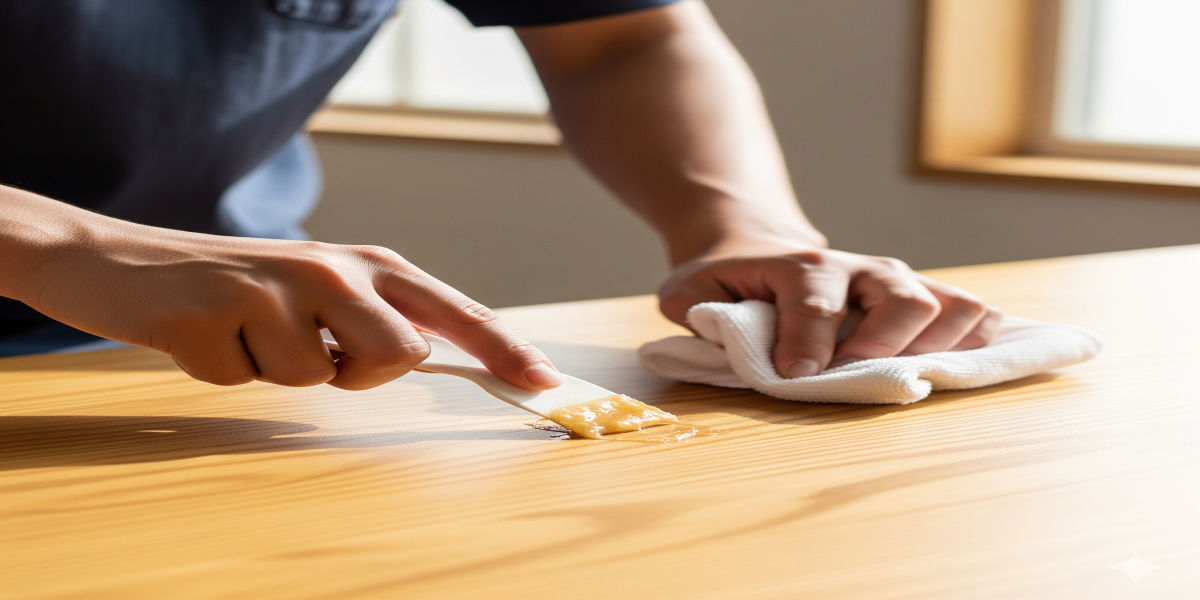
There are occasions when the adhesives used on the wood may require the application of physical force. Gently wipe off persistent residue with a plastic scraper, a used credit card, or your fingernail. Sharp metal tools should be avoided, as they may scratch or gouge the wood.
This technique should be combined with heat, oil, or vinegar. The hardened will be removed more easily.
9. Sanding as a Last Resort
Light sanding can be used to remove hardened adhesive from wooden surfaces in case of failure of other methods. Apply fine-grit sandpaper and be sure to apply it to the affected area only. Sanding is a last resort, and it may take off the glue, as well as the protective finish of the wood.
Sand the area then refinish it with polish, wax, or varnish to give it its original appearance.
10. Prevention is the Best Cure
Naturally, the simplest method of handling the adhesive from wooden surfaces is to prevent it in the beginning. Put coasters on sticky objects, replace duct tape with painter’s tape, and do not stick stickers on wood. A bit of conscientiousness spares a lot of sponging on the part of a person.
Wrapping Up
When we remove Adhesive from wooden surfaces, it should be a simple task. You are allowed to use different materials, such as heat, oils, vinegar, and commercial cleaners to get rid of the adhesive, but in fact, there are a lot of methods that would allow you to do this faster and more effectively. If you happen to have a very tough glue and a fragile surface, do not hesitate to ask for expert advice, especially when you are performing an end of lease cleaning task.