
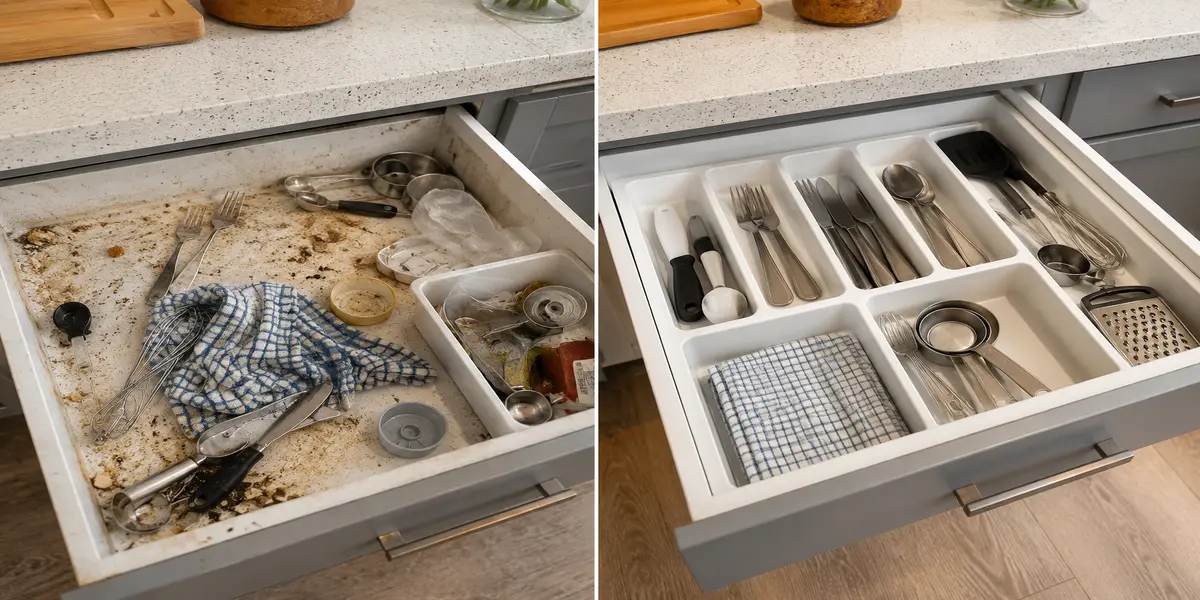
The kitchen drawers of a house in Australia are the most frequently-used storage space. The cutleries, cooking instruments, food wrappers, tea cloth, spices and dozens of common items are only a small example. The drawers have been found to store food scraps, oil dust, damp and even microbes after many uses which most of the households are not even aware of.
The kitchen tables and sink are often wiped up to keep them clean but the drawers seem to be neglected in the regular cleaning. This can cause unsanitary areas, bad odours and even the presence of bugs. It’s best to keep on cleaning your kitchen drawers frequently so that your entire kitchen remains healthy, sanitized and well-stocked with supplies.
In this post we will explain why kitchen drawers get dirtier than you expect what leads to the accumulation of that hidden dirt how to clean kitchen drawers properly and a few easy maintenance tips that help keep Australian kitchens clean for longer.
Table of Contents
Everyday Use Creates Dirt
Kitchen drawers are used practically every day and are probably the most used storage places in the house. When one takes the cutlery, cooking utensils, measuring spoons or food wraps out, minute flecks of dust crumbs oils and dampness end up in the drawers. Natural skin oils even clean hands can leave behind and that gradually build up a layer of additional dirt. Drawers are generally closed and so are left to get grimy. Routine cleaning of the Kitchen drawer can eliminate these concealed pollutants before they turn into something hard to clean and also it can facilitate in keeping better hygiene in the kitchen.
Crumbs Hide In Corners
During a cooking spree some small bits of food easily fall into the kitchen drawers. These are often little bits of crumbs, grains of rice flour, sugar herbs, coffee grounds and spices which have spilled off from kitchen utensils or packaging. These tiny pieces get lodged in the corners of the drawers underneath the organisers and along the drawer guides where only wiping wouldn’t be enough cleaning.
Then accumulated crumbs start to attract bugs and give off an unpleasant smell. Homeowners who regularly and meticulously clean their kitchen drawers will not only prevent the risk of food contamination but will also prevent the dirt that nobody can see to develop into a major hygiene problem. Occasional deep-cleaning is an effective way of preventing unhygienic situations in your storage cabinets.
Grease Travels Surprisingly Far
Many think grease just sits on the stovetop, but cooking oils go airborne while frying and grilling. Film of grease and dust Grease is very small particles but when accumulated form a big grease area. They settle on almost every place in the kitchen from the cupboards and drawer doors, their handles to the inside of drawers. This film of grease and dust is very sticky and captures dirt more efficiently. Normal dusting doesn’t get all the way through that residue. Proper cleaning of Kitchen drawers with warm water and mild detergent and you can safely clean Kitchen drawers and cut through the grease without damaging drawer finishes or protective coatings.
Common Sources Of Drawer Grime
| Source | How It Builds Up | Cleaning Frequency |
| Food crumbs | Fall from utensils and packaging | Weekly |
| Cooking grease | Airborne cooking residue | Every 2–4 weeks |
| Dust | Enters through small gaps | Monthly |
| Moisture | Damp utensils and cloths | As needed |
| Spices and powders | Small spills during cooking | Weekly |
Moisture Encourages Bacteria Growth
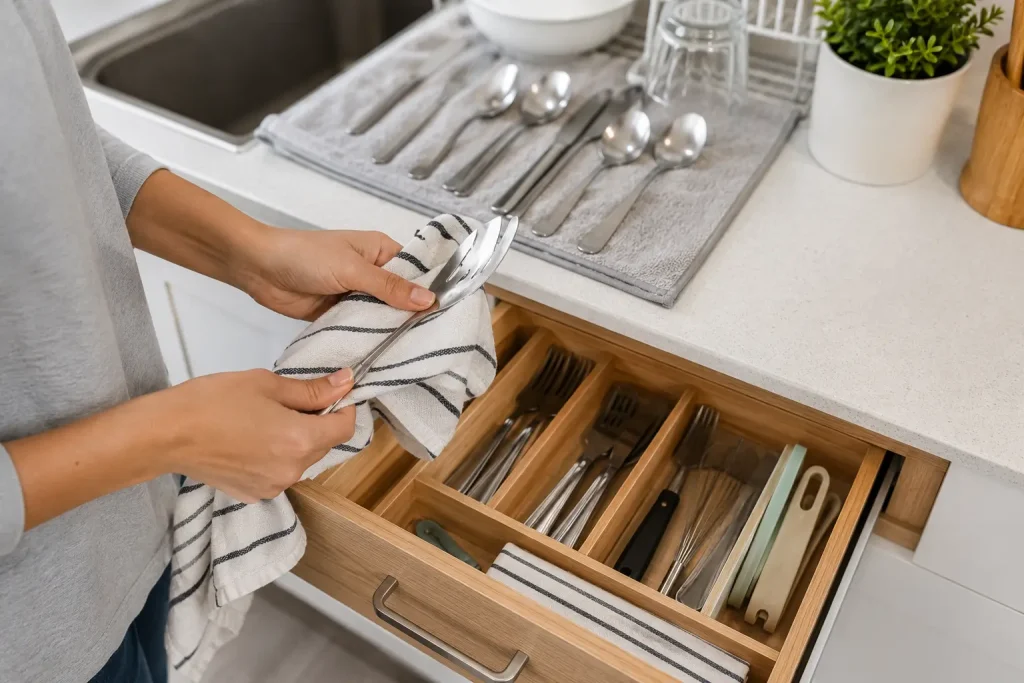
In kitchen drawers there can be damp tea towels, freshly washed utensils, reusable cloths or containers that aren’t quite dry. Even minor quantities of residual moisture provide an environment conducive to the sustained growth of bacteria and mould. Moisture also leads to bad odours and if moisture is neglected it may also cause wooden drawers to rot. In addition to regular checks, reliable domestic cleaning services can help maintain kitchen hygiene and identify moisture-related cleaning concerns before they become bigger problems.
One should not forget that cleaning and checking regularly the interior of the drawers in one’s kitchen is also an important thing to do so that one can find out about any moisture that might be hiding underneath and before it’s too late, get rid of it because the latter is both a hygiene and a structural matter of your drawer.
Hidden Grime Attracts Pests
Invisible traces of food inside kitchen drawers are an easy food source for ants, cockroaches and pantry pests. Small crumbs that appear to be safe for human consumption can be a source of attraction for unwanted insects that are in search of food. After finding a reliable source of food, pests such as these will travel to you and contaminate not only your immediate kitchen area but also your surrounding cabinets and pantry shelves. Regular kitchen drawer cleaning will negate the need to deal with these attractants for the pests. Cleaning drawer interiors, vacuuming corners and cleaning beneath organisers can do much to prevent insects from taking up residence in your kitchen storage.
Simple Cleaning Makes Difference
Cleaning kitchen drawers doesn’t mean you have to buy fancy stuff or get out your biggest box of tools. Get rid of the stuff that was making up the drawer and empty the food crumbs in the garbage bin after you’ve cleaned your drawers. Get the corners of your drawers clean by vacuuming with the hose attachment and you can clean the drawer by washing with warm water and some dish soap. Once the drawer is dry return the organizers and items inside carefully. These practices are so easy and simple, yet do incredible things when cleaning the kitchen drawers properly and also stopping invisible dirt from accumulating again.
Kitchen Drawer Cleaning Checklist
| Cleaning Task | Recommended Frequency | Benefit |
| Empty drawers completely | Monthly | Removes hidden debris |
| Vacuum drawer corners | Monthly | Eliminates crumbs and dust |
| Wipe drawer interiors | Every 2–4 weeks | Removes grease and bacteria |
| Wash drawer organisers | Monthly | Improves hygiene |
| Check for moisture | Weekly | Prevents mould growth |
| Inspect for pests | Monthly | Reduces infestation risk |
Build Better Drawer Habits
Preventing dirt formation is far easier than attempting to remove it after it has turned into a stubborn, sticky mess. Don’t put wet towels in cupboards and clean up any spills immediately to prevent them spreading under organisers. Use drawer organizers to group like items and to keep food crumbs from hiding in secret corners. Dust surrounding kitchen floors routinely as dirt and particles tend to be tracked down into lower drawers by foot traffic.
Let your cooking utensils completely dry before storing them away again. By doing these little cleaning tricks while you’re doing the regular Kitchen Drawer Cleaning our Australian families can have the pleasure of a cleaner kitchen while putting in less effort throughout the year. For more information, read our guide on why pest problems are increasing in modern homes.
Conclusion
Kitchen drawers could look tidy from the outside while they secretly become dirty and full of all kinds of tiny dirt bits from crumbs, grease dust, moisture and bacteria inside. Since such compartments are used almost daily, the accumulation of dirt in the background occurs much faster than the home-owners imagine. Regular cleansing of your kitchen drawers is a way to maintain your kitchen sanitary. Australian families that regularly clean their kitchen drawers report better hygiene at home, more time saved on prep meals because their things are already there, and all around clean homes too.
Frequently Asked Questions
1. How often should kitchen drawers be cleaned?
Regular cleaning of most kitchen drawers is done after two or four weeks yet drawers containing cutlery that is always at hand probably need cleaning every week.
2. What is the best way to clean kitchen drawers?
Open the drawer and put everything out then vacuum or wipe all the loose dirt after washing them with soapy warm water, drying them thoroughly and putting back your clean and nice organizers and tools in.
3. Why do kitchen drawers become sticky?
Dirty particles together with grease particles floating in the kitchen air will combine with moisture, dust and other food items and finally deposit as a sticky layer.
4. Can dirty kitchen drawers attract pests?
Yes, Crumbs, food residue and spills in drawers can attract ants, cockroaches and other household pests.
5. Should drawer organisers also be cleaned?
Yes, Drawer organisers are prone to the same dust, grease and crumbs as the drawer itself and should be cleaned periodically for hygiene purposes.